


How to Build Your Own Digital Product Selling App?
Building your own digital product selling app sounds like a daunting task, but it's totally doable if you break it down into bite-sized pieces! Start by nailing down your niche—what kind of digital goodies are you planning to sell?
 Mera Template
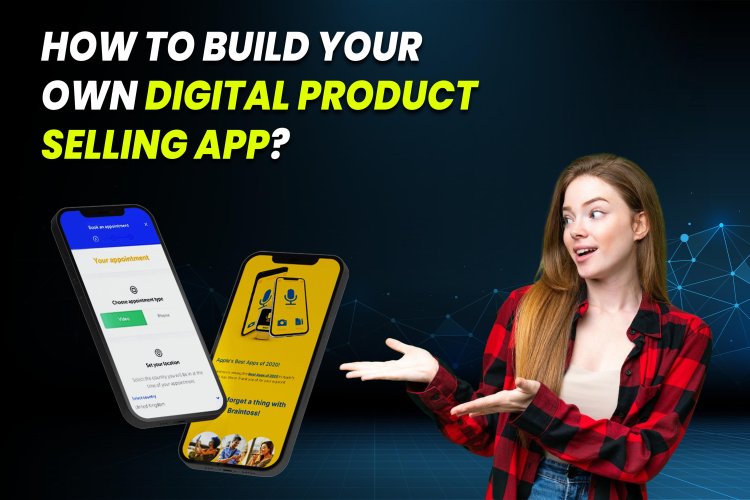



How to Build Your Own Digital Product Selling App: A Step-by-Step Guide
With the reign of digital downloads in every aspect of our life: eBooks, templates, online courses, music, software, you can develop your personal digital product selling application that will be a game-changer. Control, branding and profit are in plain view when you own your own platform whether you are a solopreneur or a business. And here is the way how to create one with starting point:
Step 1: Niche and Element of Product
There is a number of ways to start: you can choose what type of digital goods you will sell. Do you specialize in the design assets, educational materials, the mobile apps or even several categories? A defined niche will assist in informing functionality and user experience.
Step 2: Select Opposite Tech Stack
Make the call to decide whether to develop your app natively (in Android / iOS), as a web application, or such cross-platform technologies as Flutter or React Native. The type of tech stack you select is going to have consequences to performance, scalability, and cost of development.
Step 3: Create a one-fluid design UI/UX
It must have a friendly user interface. Pay extra attention to clean navigation, mobile-friendliness, as well as an easily understandable sequence of product searching and checkout. It should be easy to locate and preview and buy products.
Step 4: Develop essential functions
Add user registration, the possibility to upload product in the digital form, payment interface (Stripe, PayPal, UPI), download immediately after payment, reviews, and safe digital delivery. Include dashboards of the sellers (in case of a marketplace) and buyers.
Step 5: Introduce a Safe Payment and License Process
Secure payment gateways by using the encryption to add security to your products use license keys or watermark when you feel like doing so. Send them download links immediately after the purchase.
Step 6: Test &Launch
Carry out beta tests on various devices before going live. Avoid bugs, improve performance and make sure your application does not violate app store guidelines and electronic commerce laws.
Step 7: Optimize and market
Start with a good promotion strategy of emails, influencers, search engine optimization, and in-app advertisement. Get feedbacks and refine your app with time.

Features Any High-Converting Digital Product Selling App Must Have
Having a successful app that sells digital products does not mean having the files available to be downloaded by the app users, but rather creating frictionless, trusting and optimized experience to make the user buy. These are the features you must have in your app to drive your visitors to paying customer:
- User-Centric design Clear design
The interface of your app is to be user-friendly and non-overloaded. Consider a layout which could be more focused on product classes, search and direct access to top selling/featured products. The need is to have a responsive design to be suitable on all devices.
- Intelligent search and filtering Search and filtering Smart Search & Filters
Allow cross-filtering so that users can locate content fast using powerful search as well as category search, format search, price search, rating search, or by date added. The face-to-face product recommendations enhance interaction as well.
- A Safe Payment Gateway
Offer reliable payment providers such as Stripe, Razorpay, PayPal, or Google Pay. Safe transactions with speed instill confidence and provide cart abandonments.
- On demand Download & Access
Clients demand instant access to whatever they have bought. Automatic file delivery after payment is made, and have email receipts containing download links. Provide support to cloud storage integration where necessary.
- Product Previews and Description
Add file (an image, an audio snippet, a PDF page) previews and detailed descriptions, licenses and format information.
- Account w/ user purchases
Enable users to have account so as to make purchases, download and see their purchase history. Provide possibilities of wish list or save-after-later.
- Ratings Rich Reviews
Conversions are increased by social proof. Allow reviewing and rating of products so that other users take instructed purchase decisions.
- Seller Dashboard (in the case of market places)
In the case you enable other creators to sell, give them the means to add their products, handle sales, and monitor profits, and retrieve payments.
- Push Notifications
Send an in-app messaging or a push notification that informs the user about new uploads, discounts, cart reminding.

What’s the Real Cost of Building a Digital Product Selling App in 2025?
As the demand of digital goods, such as eBooks, software, design templates and online courses is getting elevated, a number of entrepreneurs and businesses are aspiring to develop their own digital product selling application. However, the popular question, early on in the planning process is: What will it actually be to construct one in 2025?
The truth? It relies on a number of main factors. Here is a breakdown to give you an idea about the actual investment.
- Platform Selecting: Web, Android, iOS, or All three
In case you intend to create a simple web application, it can cost between 8,000 to 20,000. That can be boosted to as high as 25,000-60,000+ by adding native Android and native iOS applications and alternatively, you can put in cross-platform frameworks such as Flutter or React Native or build apps specific to individual operating systems.
- Design & User experience
It is essential to use custom UI/UX design that makes the shopping and checkout process efficient. Engaging a designer or an agency may cost between 2,000 and 8,000 dollars depending on the level of work and branding.
- Basic Functions and Capability
The not-to-be omitted features: user accounts, previews of the products, and download management, safe payments (Stripe, Razorpay, PayPal), and license protection are an addition to the development duration. A feature set can cost 10 000 15 000 to 25 000 dollars.
In the case of a multi-vendor marketplace app when third-party sellers will be able to register and sell, this price will increase by 30-40 percent because you will have to include seller dashboards and somewhere to track earnings and make withdrawals.
- Administration Panel and Reporting
A user-administration, upload-administration, payment-administration and Report administration panel will cost another 3,000-7,000.
- Hosting, APIs and Maintenance
Continuous hosting, cloud storage (delivery of files), email APIs (such as SendGrid) and security services will run 100-500/month. The cost of maintenance and updates on a yearly basis may be 15-20% of all development spending. Meratemplate https://meratemplate.com/ this website includes all information regarding any of user's concern.
My Contact Number is +91 95187 40169