


How to Build an App Like Petpooja? A Complete Development Guide
Building an app like Petpooja is an exciting venture, and it's all about breaking it down into bite-sized steps! First off, start by defining the core features you want to include—think user-friendly interfaces for restaurant owners and customers alike, seamless payment integrations, and robust management tools.
 Mera Template



How to Build an App Like Petpooja? A Complete Development Guide
Petpooja is one of the widely used restaurant POS (Point of Sale) systems in India, which has helped over 75,000 restaurants in the country to become digital. And in case you are planning to make an application like Petpooja, then you have to think not only of restaurant-oriented features but also of the comfort of the backend panel. Guide to development is provided here.
Step 1: planning and Market Research
start by conducting research in the market, intensively, in order to understand the needs of restaurants, small and large. Attack the pain points like, billing errors, inventory, labor inefficiency and digitization of menu. Determine the USP and the audience of your app.
Step 2: Key Traits to be added
To be capable of competing with a POS solution like Petpooja, your app must the following features:
- Billing & KOT (Kitchen Order Tickets)
- Inventory Management
- Royalty and CRM Integration
- Management of Photo Menu.
- Tablet, Mobile, Desktop responsive design (Tablet, Mobile, Desktop)
- Analytics Dashboard
- Third party Integrations (Swiggy, Zomato, etc).

Step 3: Choosing the Right Tech Stack
Either Node.js or Django is good on the backend. Either React Native or Flutter ensure the cross-platform on the frontend. Firebase or AWS cloud databases are a good option since they scale.
Step 4: UI / UX Design
Create simple and easy to use interface. Waiters, managers, and chefs will use the app and hence it should be simple to maneuver and quick to load even in low connection.
Step 5: Development- Testing
Make use of painless feature release agile technology. Do testing: load testing, stress testing and UX testing to feel certain about a highly demanding environment.
Step 6: Launch and Feedback
Launch an MVP and obtain feedback of actual restaurant users. Repeat user-requirements and analytics.
Step 7: Maintenance Support.
Offer twenty four hour customer support and regular upgrades so as to be competitive and safe.
Business Model of Petpooja: How This POS Software Powers Over 75,000 Restaurants
Petpooja has transformed the restaurants operation in India by providing a billing system but not only that. The business model is foundedally designed to be scalable, flexible, and SaaS recurring revenue.
- Subscription Model Subscription model is based on SaaS.
Petpooja is mostly based on monthly/annually subscription on its POS software. This commission depends on the restaurant size and type and can be 5000/month (small restaurants) or 10000 and more (big chains and multi-location restaurants).
- Hardware Sales Leasing
Besides software, Petpooja also provides hardware operating in the form of POS terminals, printers, and tablets. They are either sold or leased out generating another channel of revenue.
- Value-Added Services
Petpooja makes money on integrations with payment gates, food delivery (Zomato, Swiggy) and loyalty programs. Every integration is usually accompanied by a rev share or a per- transaction fee.
- Franchising Partner Network
Petpooja has a network of local partners that assist in on boarding restaurants. These partners get commissions as they increase the market of Petpooja.
- App Marketplace
Petpooja has a plug-and-play marketplace in which restaurants can subscribe to other apps, such as accounting, CRM or delivery management- which helps with upselling and customer retention.
- Data Insights & Analytics
Having access to millions of points of data, Petpooja might be in a position to monetize anonymized insights of the data in terms of market trends, inventory optimization, and consumer behaviour (however this should comply with privacy legislatures).
The main strengths of the model relate to its applicability and potential to impose the least possible restrictions on a relatively open society.
- Scalability: Suitable both to small restaurants and to multi-outlet chains.
- Recurrence: The billing will be done monthly to maintain a constant cash flow.
- Stickiness: Customers are sticky because of integrations and because of being easy to use.
The business model of Petpooja shows that restaurant-centered SaaS products can take over small niches when they are created with clarity, customer feedback, and regular innovation.

Features of Petpooja Software: What Makes It a Market Leader in Restaurant POS
Petpooja has become a force in the Indian restaurant technology empire, offering a powerful, simple to use Point of Sale (POS) system built specifically with food and beverage establishments in mind. It is more than a billing feature set, which makes it a full-stack restaurant management platform. The following are the excellent attributes that make Petpooja a market leader:
- SBS- Smart Billing System
Petpooja provides blistering billing interface, which supports touch devices and table-wise order management. it is compatible with GST, split bills, mode of payments (UPI, cards, wallets), and Kitchen Order Tickets (KOT).
- Inventory Management
Movement of raw materials, food stock, wastage and supplier information can also be tracked in real-time. This assists the restaurants to minimize loss and to manage the supply chains effectively.
- Menu Customization
Restaurants may easily change prices, include pictures and deal with daily specials or discounts. Centralized menu system is compatible among the outlets making it easier to operate in large chains.
- Loyalty and CRM Integration
Petpooja assists in developing customer relations, having integrated tools of loyalty points, customer tagging, SMS/email campaigns. It goes as far as to monitor customer preference on individual service.
- Vendor and Purchase management
Track suppliers, create POs and monitor inward goods though comprehensive reports. This makes it transparent and helps in the control of cost.
- Online Order Integration
Petpooja is integrated with Swiggy, Zomato, Dunzo, and even WhatsApp ordering. This eliminates the use of many devices and integrates all the online orders in a single dashboard.
- Reports and Analytics
Managers can download more than 80 different types of reports in real-time, whether it is sales summaries or performance at an item level, to make smart decisions.
- Multi-Device Support
It is compatible with Android tablets, Windows desktops, and thermal printers- which means that it can be customized to any arrangement.
- Security and Users Roles
You may add roles, access levels and enable/disable logins. This provides protection of sensitive data.
What Is the Development Cost of a Restaurant POS App Like Petpooja?
To develop an app similar to Petpooja, one needs a proper plan of action, appropriate technology stack, and a team of developers who are aware of the restaurant industry. It may range significantly depending on the functions, the place of developers, and scalability needs.
- Development Factors to Be Taken Into Account
- Key Functionalities: Billing, KOT, CRM, inventory, integrations, analytics.
- Admin Panel: To manage menus, orders, users by the owners/managers.
- User Interface: Restaurant staff (cashier, waiter, kitchen) clean UI.
- Integration APIs: Payment gateways, third-party delivery platforms.
- Cloud Hosting & Security: Elastic cloud architecture is essential.
- Support System: In-app chat, feedback forms, issue tracker.
- Development Phases
- UI/UX Design: 2 000 -4 000 dollars
- Backend & APIs: 5 000 - 10 000 dollars
- Frontend Development: 4K -8K
- Testing & QA: 2,000 -3,000$
- Deployment & Launch: 1000- 2000 dollars
- Total Estimation: $15,000 -30,000 ( 12-25 lakhs) of MVP
This estimate will build one platform (web or android). Development on Android and iOS, with enhanced functionality (loyalty programs, AI-based analytics, or multilingual support) can push the price up to 40,000 dollars and above.
- Ongoing Costs
- Cloud Hosting & CDN: 50-200 dollars/month
- Maintenance & Updates: 1015% of development cost annually
- Customer Support & Training: Optional, although advised
An app at the scale such as Petpooja is not a one-time expense, rather it is a product that continues to be developed. However, when appropriately invested in and implemented, the payoff in terms of SaaS subscription fees or licenses models can produce it very lucrative.
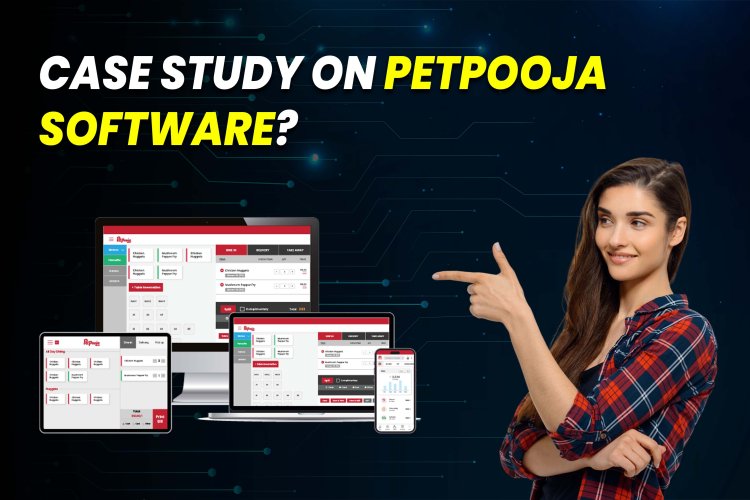
Case Study: How Petpooja Transformed Restaurant Management with Smart POS Software
Restaurant business is tough - taking of orders to billing, inventory to people management, everything should be consistent. Petpooja smart POS software has helped several restaurant owners to overcome the chaotic systems and manual procedures that caused errors, wastages, and customer dissatisfaction before adopting the Petpooja smart POS software.
Restaurants also experienced one of the greatest problems of not being able to efficiently manage orders and billing during high hours. Manual or old POS systems did not provide connection to online aggregators, inventory management and customer feedback tools. This usually resulted into delays, wrong orders and a lot of money wastage in the operations.
Petpooja Smart POS
Petpooja has presented a cloud POS system that aims at integrating and easing the operations in restaurants. The POS system had a smooth transition between the dine-in, takeaway, and delivery orders, and it had effective billing and KOT (Kitchen Order Ticket) printing and employee tracking performance. The platform was also integrated with Swiggy, Zomato and other delivery partners to assure real-time order synchronisation - to minimise errors and maximise order delivery efficiency.
Features Used:
- Bill and Order Management integrated
- Online Aggregator Sync (Zomato, Swiggy, and so on).
- Stock and Inventory Alerts
- Customer Feedback and CRM Tools
- Real-Time Reporting Dashboard
The Impact
- Restaurants experienced a massive change in the speed, accuracy and control of operations after adopting Petpooja:
- 30% Increase in Speed of processing orders: Orders were directed to the kitchen immediately with lesser wait times.
- Decrease in Billing Errors: Tax, discounts and GST were calculated automatically, hence the accuracy was increased.
- Improved Inventory Management: Automated notifications minimized stock-outs and food waste.
- Improved Customer Experience: Feedback modules and loyalty programs encouraged repeat visits.
Anywhere Access to Business Information: owners would be able to monitor sales, inventory, and employee performance in real-time no matter where they were.
My Contact Number is +91 95187 40169